- How Quickly We Get Lost in Our Stories: Come Back to the Richness of Real Life
- Fundamental Shamatha Practice
That flash of waking up out of a bubble is exactly what meditation trains. Come learn the fundamental practice of calm-abiding — taking your seat, staying with the breath, coming back each time you've wandered off.
- Nowness
Now settle more fully into this moment. Let your posture say it: nothing to hide, nothing to prove.
- Shamatha - Less Guided
Once you know the instructions, leave more space — the same precise practice of staying with the body breathing, with more room to work on your own.
- Mostly Silent
Fewer words again. Place your attention on the breath going out, let it mix with space, and rest — finding your own way.
- Melting Our Cocoon
In all that silence you'll have met the threads — thoughts, judgements, fears, spun round and round into a protective shell. Let's go deeper: sit, follow the breath, and let them be without feeding them. Watch the cocoon begin to melt.
- Open Space Awareness
Out of the cocoon, there's space. Now drop technique altogether and let your awareness extend into it — and then find that same space right here around you.
- Relax into Big Mind
Relax right down into the natural rhythm of life and ride the breath out into space. Here small mind loosens its grip, and you can begin to sense Big Mind — your true nature — and shift your allegiance toward it.
- Everything Is Included
And now bring it into the noisy world. Meditation isn't about shutting things out until conditions are perfect — practice with the background noise, and let it all be included.
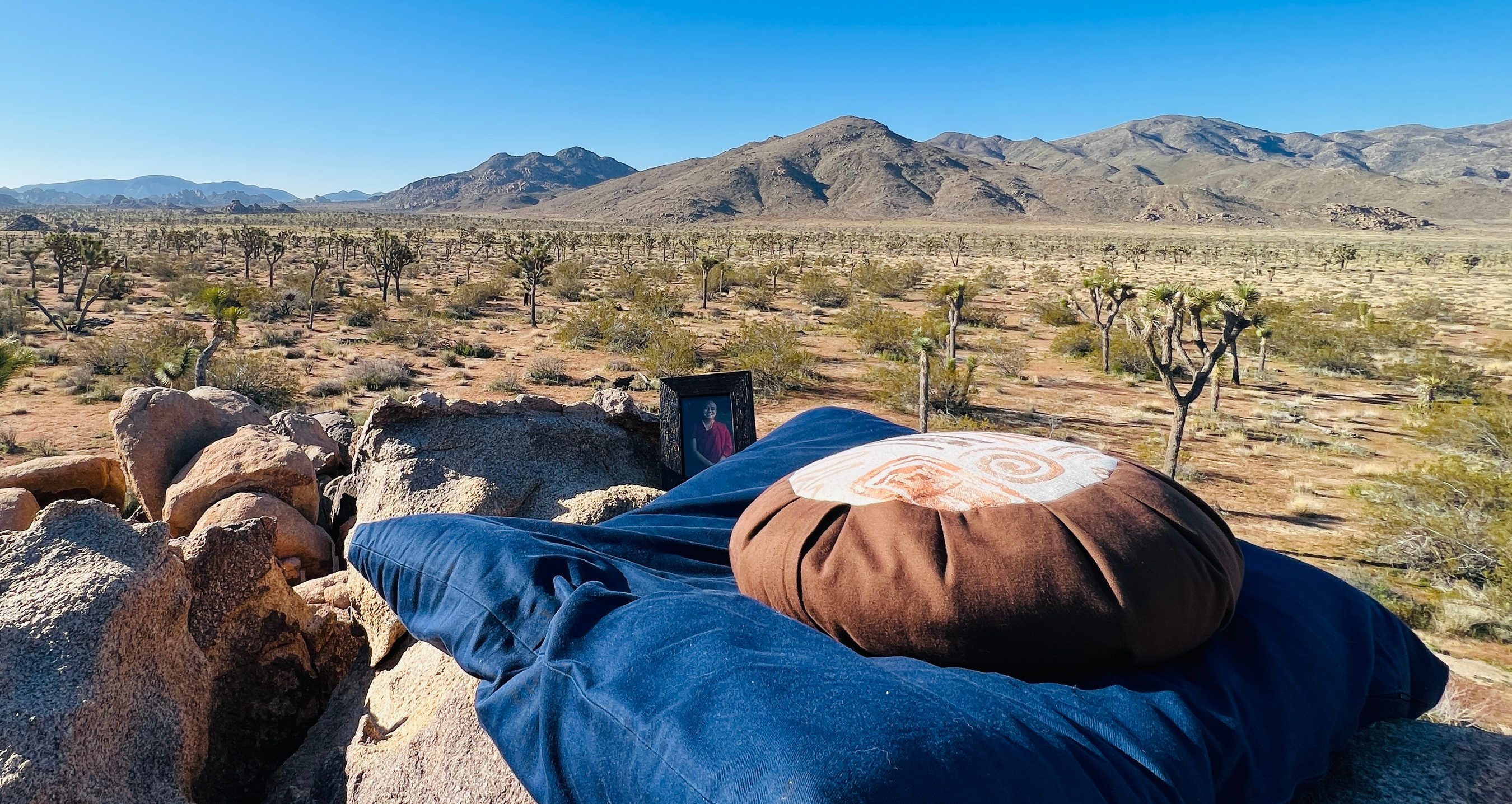
Play Meditation
Fundamental Shamatha Practice
The basic meditation practice of calm-abiding. Full instructions on this fundamental practice. A 15 minute meditation.
Transcript
[0:00] Let's practice.
[0:23] Take in our seat, just as we are, allowing all of ourselves to be here, to be welcomed.
[0:59] We can arrange our body with an upright our hips and legs, our spine tall, the sense of uprightness and upliftedness. Shoulders back, long neck, tucking our chin a little bit, relaxing our jaw. Mouth, just slightly open, our tongue on the roof of our mouth behind the teeth. Allowing breaths to flow freely. Our eyes relaxed. First point of mindfulness are these seven areas of the body. Our posture, that we can always come back to. And we could check in with our intention for practicing today. Why we practice.
[3:47] And then we could check in with the texture of our mind today, the weather. Are we cloudy, tight, anxious, spacious, clear? However, however it is, is just fine. Just checking in with what we're working with.
[4:53] And then bringing the attention of our mind to breathing, breathing out. If our mind is tight and speedy, we could be with both the breath in and out. If we are more spacious, we could just stay with the out-breath and rest in space while the body breathes in. We can choose our technique, being our own meditation instructor.
[6:18] Opening to everything being included. Whatever sounds and sights. Nothing is excluded.
[7:35] So we are right on the point, not behind, not ahead, but right on the point, on the spot as the body breathes.
[9:53] If we are clear, we can be slightly looser. Holding ourselves with gentleness. And each time we wander off, we notice and come back.
 NownessNow settle more fully into this moment. Let your posture say it: nothing to hide, nothing to prove.