- Into the Land of Monsters
- Land of Monsters
You've seen the three layers, and that the way through is noticing — the monsters shifting from facts to beliefs written on your glasses. Here's another door into the same territory: speak them aloud to someone listening with commitment, and what felt like solid fact loosens its grip in the very saying of it. Let's continue.
- Into the Land of Monsters: Personal Journey Workbook
Don't leave this as a map. Take out a pen and walk all three layers — who you want to be seen as, who you're afraid you are, and what you really are. Be brave; you can always destroy the paper later.
- How self-worth gets all screwed up
Watch the outer shell being built in real time — on a boat to Yelapa, a mind calculating its worth through a stranger's eyes. Let's go deeper into why we construct it, and what it's so afraid the monsters will show.
- Facing Hunger Monster: For Anyone Struggling with Food, Diets, Body Shame, and Weight
Now meet a monster face to face. After almost four decades of sharing a body with Hunger Monster, I went looking for it on purpose, in an Italian restaurant in Boulder — and on the way met a tiny frightened child, too scared to ask for more bread. Come sit at the table with me.
- So What, Now What
When the voices of self-blame are this loud, here's something you can do right away. Say it out loud — so what — and keep saying it until you let that energy in and see the complete emptiness of blaming yourself. What is there really to blame yourself for?
- From Shame to Joy: Leave your Inner Critic Behind
So What shows you the emptiness of blaming yourself, right now. Here's what becomes possible when the root itself is met — decades of shame dissolved, not by understanding basic goodness but by knowing it in the body. Let's go and dance in the shower.
- Feeling Bad About Yourself? Read this out loud
Now let it land in you, not just in my story. Read this one out loud, slowly, and feel — not think about — the goodness no thought can touch. You are as needed as the trees.
Into the Land of Monsters
A three-layer model of the self — the created outer shell, the land of monsters beneath, and the radiant core of true nature — and the recognition practice that lets us journey through the monsters to the light that has been shining all along.
Chapters
Transcript
[0:01] I'm Coyote Jackson, Buddhist teacher, guide, and coach. I want to share with you a simple but powerful model of the self, especially for those of us navigating trauma, addiction, or the various afflictive mental states that require deep transformation of the mind.
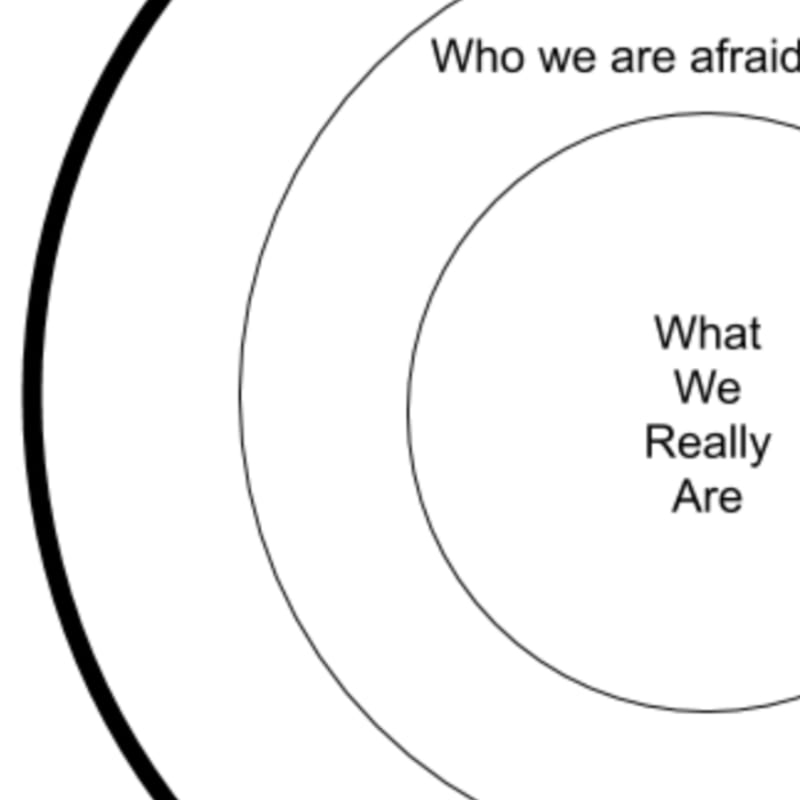
So picture the self as three concentric circles forming three layers.
The outermost layer is the self we create. It's the version of us that we want to be seen as — successful, strong, put together, happy. It's designed to be lovable and acceptable, but is full of triggers, cracks, holes, and impenetrable defensive and offensive mechanisms because it's built from a fundamental confusion. This is where we act from our strategies, our reactions, our defenses, our masks, our habitual personality. It is built to cover over what is beneath.
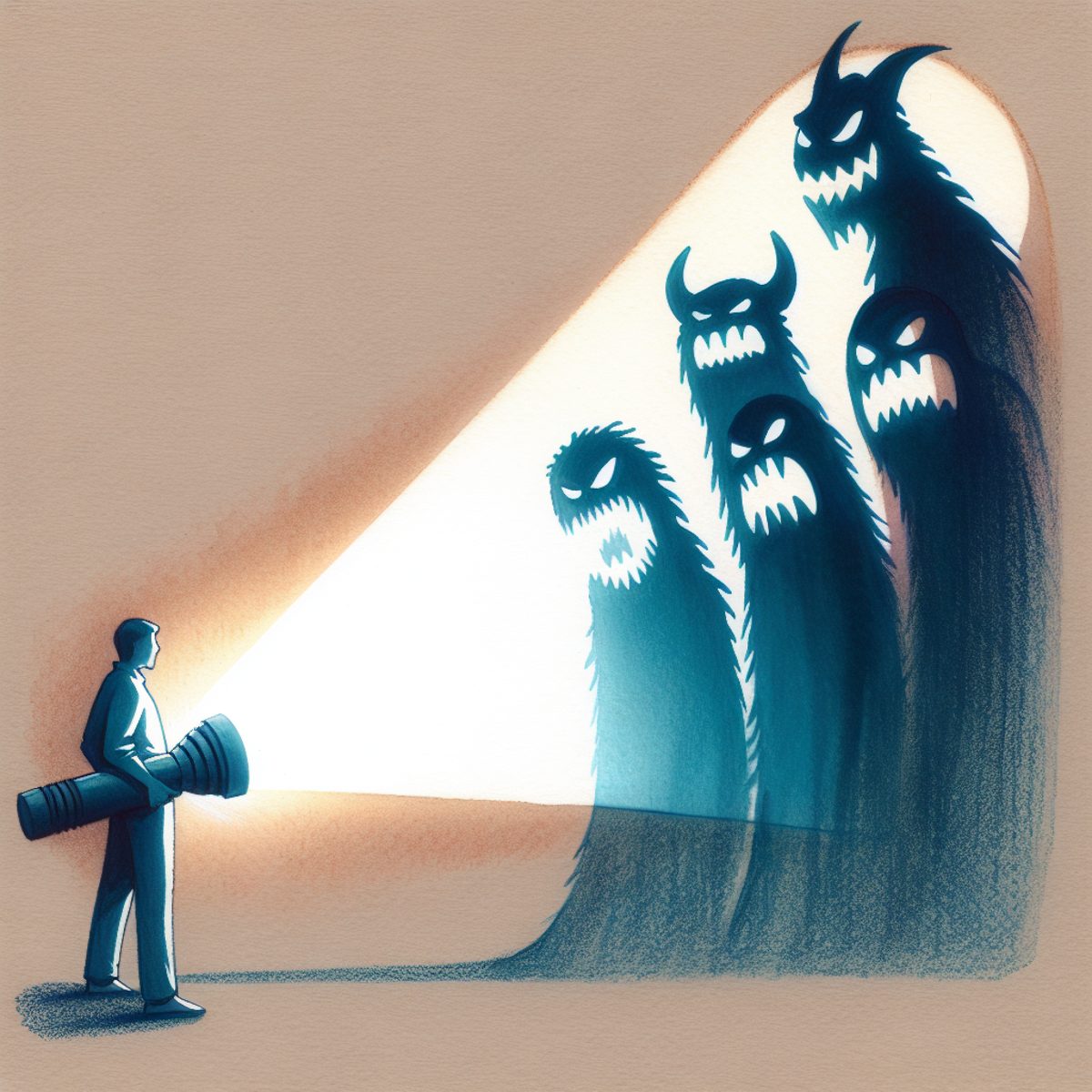
[1:02] Because below there's the layer we don't want anyone to see. Here there be monsters. The monsters are the thoughts about ourselves that have been repeated so often they become solidified into facts. I am ugly. I am a loser. I am worthless. I am stupid. I am blameworthy. Shameworthy. I do not belong. I am not a good person — not truly, deeply, really. I am defective and broken.
This monstrous land is not a pretty view of our self. And so we escape by building the outer layer of self. Makes sense. Why would we want to subject our friends and loved ones, our work colleagues to the disaster of a person that is who we believe we really are?
[2:03] We believe that these monsters are real. What they tell us is true. And we believe that they are more powerful than we can cope with. And so our survival depends on avoiding them at all costs. We fear that if we look inside, we will get swallowed up by our monsters. And so we run, we hide, we pretend, we drink, we take drugs, we smile, we control, we avoid, we manipulate. Anything to avoid going deeper into the land of monsters.
And so, of course, we construct the outer layer to hide this.
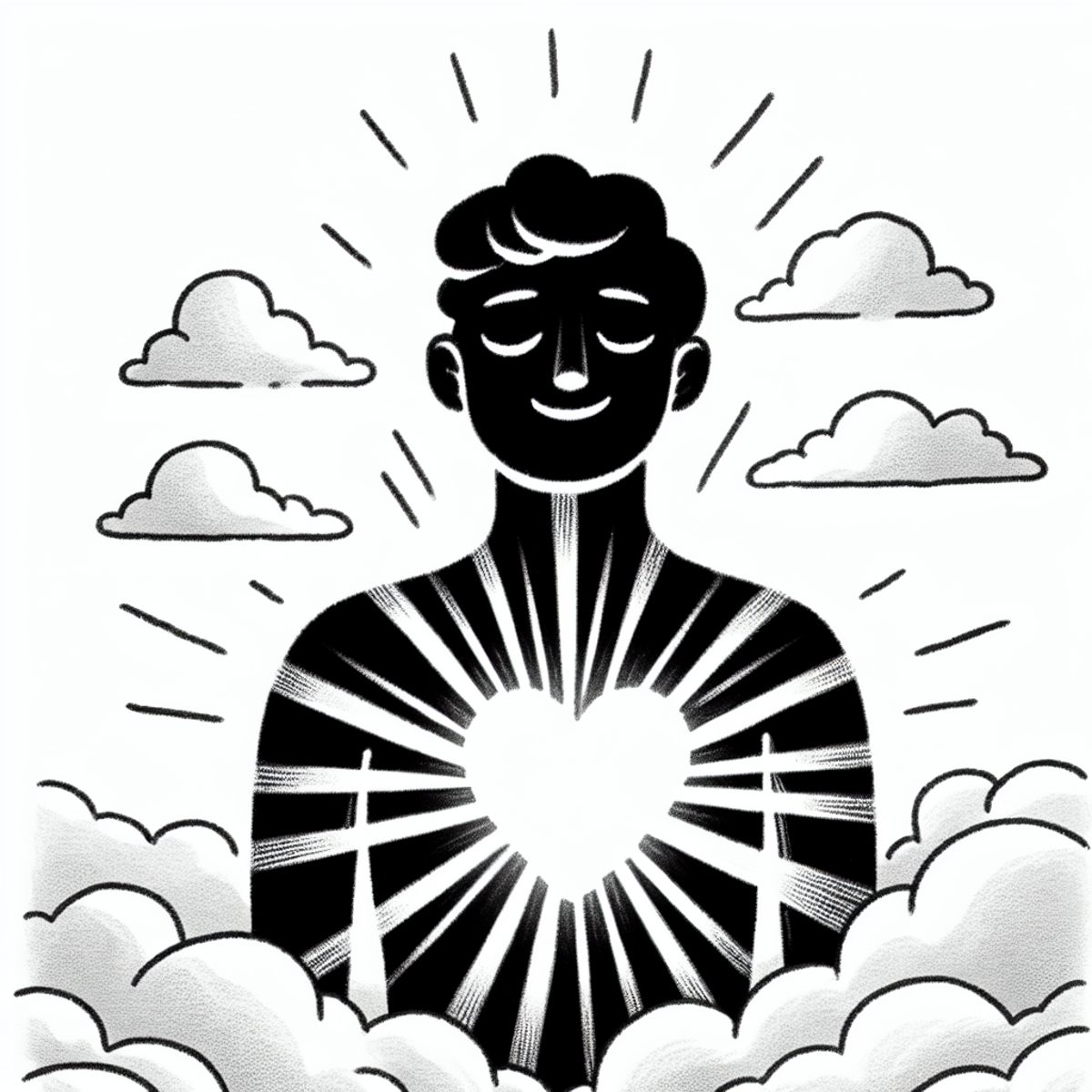
[3:03] What we don't see, however, is that beyond all of this, at the very core, is what we really are — a radiant being of love, light, connection, intimacy, playfulness, and presence. This is our essence, our unique combination of energies, of ways of being. This being, this light, is shining constantly. It is the true nature of our mind, as pointed to by the deep Buddhist and other wisdom teachings. And here's the thing — it is shining whether we know it or not.
But from where we stand in the land of monsters, we don't see it. We don't know it. Our belief in monsters acts as a barrier to us seeing the light of our true nature and keeps us involved with avoiding them. And so from this not-seeing, we avoid, we react, we pretend, we numb out, and keep building this outer shell.
[4:05] The fundamental process needed for transformation is seeing, noticing. It's a recognition problem, not an understanding problem. And recognition requires that we practice, not acquire information. Practice is the process by which we develop recognition. Understanding doesn't get us there.
Recognition of our true self — that has always been there, but we haven't recognized it because we have only been involved with avoiding the monsters. The monsters that only exist because we are avoiding them.
This journey of transformation of our mind is described in Buddhist teachings with extraordinary precision. But you don't need in any way to be Buddhist to benefit from the deep technology of the mind that it describes.
[5:05] It's the journey directly into the land of monsters. It's the journey of turning towards rather than away from what we fear to be true about ourselves. Through meditation, we train in noticing, in recognizing. We turn towards instead of turning away. And turning towards something is exactly what's needed to see it.
And in this seeing, we begin to recognize that the facts of our world — the beliefs about ourselves, our monsters — are only written on our glasses rather than fundamental facts of reality. By noticing the beliefs as being written on our glasses, we begin to create some perspective, a gap. We shift our relationship to the beliefs themselves.
By noticing, they shift from being facts of reality to things that we can now see as beliefs. As we keep noticing, we begin to see them as just habitual ways of thinking.
[6:07] And as we keep on noticing, they shift to become ephemeral mental objects that arise, abide, and fall, surrounded by gaps. And as this transition occurs on this journey through the land of monsters, we begin to see through these gaps to the inner core, and we recognize the light of our own true nature of mind. We recognize our own self as the beautiful being of light, love, and clarifying wisdom we have always been.
[7:08] And to conclude — this is only helpful to the extent that it encourages practice. My ask is that you take whatever insight or recognition might have developed by watching this and put it towards practice. Practice loving kindness for yourself and others. Care enough for yourself to take on this journey through the land of monsters, to come into recognition of your true self.
 Land of MonstersYou've seen the three layers, and that the way through is noticing — the monsters shifting from facts to beliefs written on your glasses. Here's another door into the same territory: speak them aloud to someone listening with commitment, and what felt like solid fact loosens its grip in the very saying of it. Let's continue.
To learn more, follow these links to related content:
Deeper
How self-worth gets all screwed upWatch the three layers operate in real time — on a boat to Yelapa, the mind calculating its worth through everyone else's eyes. Let's go deeper into how the outer shell gets built, and what it's so afraid the monsters will reveal.
From Shame to Joy: Leave your Inner Critic BehindHere's what waits on the other side of the monsters — not as concept but as lived proof: dancing naked in the shower, the one-way perspex walls finally down. Let's go deeper into what it actually feels like when the recognition lands in the body.
Along
Integrate
Practice
Feeling Bad About Yourself? Read this out loudDon't just understand this — feel it. Whatever monstrous thought is loudest right now, let's meet it directly and discover that not one of them touches the magical nature you're made of.
Beginning AgainThe monsters don't dissolve once and stay gone — they arise, abide, and fall, and you turn toward them again. This is not failure; it's the practice itself. Let's carry the recognition into returning, and returning, and returning.
Melting Our CocoonThose monsters are threads — thoughts spun so often they've hardened into a shell around you. Come sit, follow the breath, and let them be without feeding them. Watch the gaps open where the light comes through.
Loving-KindnessTake whatever recognition just arose and pour it into the one practice that dissolves every wall: loving-kindness, for yourself first and then for everyone. This is where the map becomes a path.
Into the Land of Monsters: Personal Journey Workbook
Dissolving Your Inner Critic
What’s next
Land of MonstersYou've seen the three layers, and that the way through is noticing — the monsters shifting from facts to beliefs written on your glasses. Here's another door into the same territory: speak them aloud to someone listening with commitment, and what felt like solid fact loosens its grip in the very saying of it. Let's continue.Deeper
Along
Integrate
Practice